
Buying a new boiler can feel like a minefield!
There are so many models, confusing terms, and everyone you speak to seems to have a different opinion. This guide breaks it all down in plain English, so you can pick the right boiler for your home, your budget, and the way you actually live.
1) What does your boiler need to do?
A boiler does two main jobs:
- Heating: it warms your radiators (and sometimes underfloor heating)
- Hot water: it heats water for taps and showers
The “right” boiler depends on:
- How many bathrooms you have
- How many people live in the house
- How often you run hot water at the same time
- Your water pressure (mains pressure matters a lot)
- The space you’ve got for the boiler and any extra kit
- Whether you want better controls and lower bills
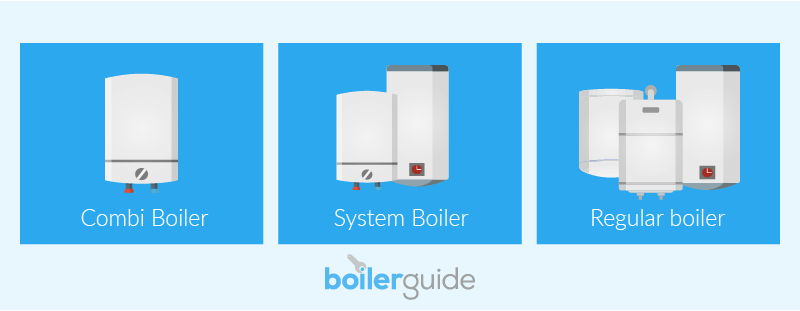
2) The three main boiler types
https://www.boilerguide.co.uk/boilers/types
Combi Boiler
A combi (combination) boiler gives you heating and hot water on demand, straight from the mains. No hot water cylinder needed.
Best for:
- Flats and small to medium homes
- 1 bathroom (sometimes 2 if usage is light)
- Homes with decent mains water pressure
- Anyone who wants to free up cupboard space
Keep in mind:
- If two showers run at once, flow can drop, depending on your mains pressure and boiler output
- If your mains pressure is poor, a combi might not be the best match
System boiler
A system boiler heats your radiators and works with a hot water cylinder (usually in an airing cupboard). It doesn’t need a cold water tank in the loft.
Best for:
- Homes with 2 or more bathrooms
- Families who use hot water at the same time
- Properties where you want stronger hot water delivery to multiple taps
Keep in mind:
- You need space for a cylinder
- Once the cylinder runs out, you’ll need to wait for it to reheat
Regular (heat-only) boiler
A regular boiler also uses a hot water cylinder, but it usually needs a cold water tank as well.
Best for:
- Older heating systems already set up this way
- Homes with very low mains pressure (because stored water helps)
- Some larger or more complex systems
Keep in mind:
- More parts, more space needed (tank plus cylinder)
- Often chosen when it’s the simplest replacement for an older setup
3) Boiler sizing: bigger isn’t always better!
Boilers have a “kW” rating. Higher kW can mean more hot water flow (especially on combis), but it does not automatically mean you’ll save money or heat faster.
A boiler should be sized properly based on:
- Heat loss of the property (insulation, windows, size)
- Number of radiators and how they’re used
- Hot water demand (showers, baths, multiple bathrooms)
What can go wrong if it’s oversized?
- The boiler “cycles” on and off too often
- Efficiency drops in real life
- Parts can wear faster
What can go wrong if it’s undersized?
- It struggles to heat the home in cold weather
- Hot water flow feels weak (especially for combis)
- It has longer warm-up times
A proper heat loss check is the best way to get this right, rather than guessing. A qualified heat engineer will do this for you.
4) Your hot water habits matter more than you think
Two homes can be the same size and still need different boilers.
Ask yourself:
- Do you often run a shower while someone uses the kitchen tap?
- Do you have a rainfall shower ? (They can use a lot of extra water)
- Is it baths most nights, or mainly quick showers?
- Do you ever have guests staying over?
Real world examples:
- A couple in a 3-bed with one bathroom might be perfect with a combi.
- A family of five with two bathrooms often suits a system boiler and cylinder better.
- If you want strong, steady hot water to multiple outlets at once, stored hot water (system or regular) is usually the safer bet.
5) Boiler efficiency and what it actually means for bills
Modern boilers are typically A-rated condensing boilers. “Condensing” means the boiler recovers more heat from the flue gases, which boosts efficiency.
To get the most out of that efficiency, focus on:
- Correct sizing
- A good quality thermostat
- System health (clean pipework, balanced radiators)
- Lower flow temperatures where suitable
A new boiler fitted onto a sludged-up system is like putting a new engine in a car with dirty fuel lines. It can still work, but it won’t feel as good as it should.
A power flush is always recommended with a boiler installation, especially in homes where the radiators are older.
6) Controls: the quickest way to improve comfort and cut waste
Boiler controls can make a big difference, especially in typical UK homes where heating gets left on longer than it needs to.
Useful upgrades include:
- Programmable room thermostat: set the heating around your routine
- Smart thermostat: control heating from your phone, add schedules, and often get better temperature control
- Thermostatic radiator valves (TRVs): set different rooms to different temperatures
If you’re already changing the boiler, it’s a good time to upgrade controls too, because a lot of the work overlaps.
7) Brands, warranties, and what you should look for
People often ask, “What’s the best boiler brand?” The honest answer is: there are strong options, but the best choice depends on your home and budget.
Here’s what to look for instead of just the badge on the front:
- Warranty length: Many leading brands offer long warranties when installed by an approved engineer.
- Local parts availability: If something ever needs replacing, you want parts that are easy to get.
- Support and repair network: Helpful if you ever need manufacturer involvement.
- Model suitability: Some models cope better with bigger hot water demand or certain system layouts.
Renova Gas commonly installs boilers from leading manufacturers like Vaillant, Baxi and Ideal, with options that can come with long warranties depending on the model and installation requirements.
8) Your existing system: what might need upgrading with the boiler?
A boiler replacement is sometimes straightforward, but not always. Things that can affect the job:
- Pipework condition and size
- Old valves and pumps
- Radiator condition
- System sludge or blockages
- Flue position and routing
- Condensate drain route (condensing boilers need this)
- Gas pipe sizing (especially if upgrading to a higher output combi)
A good installer will talk you through what needs doing and why, then quote clearly.
9) Combi conversion: should you switch from a tank to a combi?
Switching to a combi is popular because it frees up space and gives hot water on demand.
A combi conversion can be great if:
- Your mains water pressure and flow rate are good
- You’ve got 1 bathroom (or light use across 2)
- You want to remove the cylinder and tanks
A combi conversion might not be ideal if:
- You regularly use hot water in multiple places at once
- Your mains pressure is poor
- You’ve got 2+ bathrooms with heavy usage
Sometimes a system boiler with an unvented cylinder is the better “upgrade”, especially for families who want strong showers and multiple outlets.
10) How much does a new boiler cost in the UK?
Boiler prices vary a lot because the job isn’t just the unit. The install matters, and every house is different.
Your final cost usually depends on:
- Boiler type and output
- Brand and warranty package
- Whether it’s a like-for-like swap or a conversion
- Flue changes or relocations
- Upgrades like controls, filter, extra pipework
- System cleaning work required
If you’re budgeting, treat any online “from £X” figures as a rough starting point. The right way is a proper survey and a fixed quote.
Renova Gas positions installs around clear advice, fixed-price quotes where possible, and a tidy, respectful job from start to finish.
Finance options may be available through their credit broker relationship, which can help spread the cost for bigger installs.
11) Picking the right installer (this matters as much as the boiler)
You can buy a great boiler and still end up with headaches if the install isn’t done properly!
Look for:
- Gas Safe registration
- Clear written quote
- Good communication
- Good reviews and local reputation
- Aftercare and servicing options
- Workmanship guarantee
Renova Gas is Gas Safe registered, highlights 20 years’ experience, and focuses heavily on turning up when promised, clear communication, and leaving the home clean, with a workmanship guarantee on installs.
13) Common questions
“Will a new boiler fix cold radiators?”
Sometimes. But cold spots or slow warm-up can also be sludge, poor balancing, or undersized radiators. A boiler upgrade is a great time to sort the whole system so it runs properly.
“Do I need a boiler service every year?”
Yes, it’s a smart move for safety, reliability, and efficiency. Many warranties also expect annual servicing. Renova Gas offers annual boiler servicing as part of ongoing care.
“Should I move the boiler?”
You can, but it adds cost because it can involve moving pipework, flue routes, and condensate drains. Sometimes it’s worth it for better space use or a cleaner kitchen.
Choosing the right boiler isn’t about buying the most expensive one or the biggest one. It’s about matching the boiler type and size to your home and your hot water habits, then getting it installed properly with the right controls.
If you want straightforward advice without the sales pitch, Renova Gas is set up for exactly that, serving Lancashire and North West area.